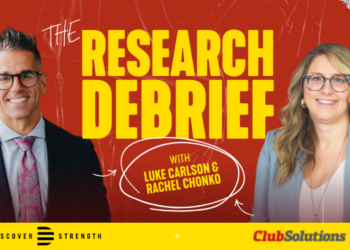

In Episode 2 of The Research Debrief, Rachel Chonko, Editor-in-Chief of Club Solutions, is joined by Luke Carlson, founder and CEO of Discover Strength, to unpack what Carlson describes as the most important exercise science paper published in the last decade: “The Global Consensus on Optimal Exercise Recommendations for Enhancing Healthy Longevity in Older Adults.”
Together, they break down how a global panel of researchers synthesized decades of evidence to define exactly how exercise should be prescribed to support health span, functional capacity and disease prevention as populations age.
This podcast series is designed to help health club operators, executives and fitness leaders bridge the gap between exercise science and real-world application — translating research into practical insights that can inform programming, marketing and long-term strategy.
Listen:
What This Episode Covers
This episode examines the scientific consensus on how exercise directly impacts healthy aging — and what that means for fitness operators.
1. Why Healthy Aging Is the Fitness Industry’s Biggest Opportunity
The episode opens by addressing a reality shaping the future of the industry: the global population over age 65 is projected to double to 1.5 billion people by 2050. While longevity is widely discussed, the research emphasizes health span — the ability to live longer and maintain physical function and quality of life.
Carlson explains that this paper serves as a science-based blueprint for aging well, cutting through popular longevity narratives and grounding the conversation in peer-reviewed evidence.
2. The “Exercise Phenotype” and Why It Matters
The researchers introduce the concept of the exercise phenotype, describing how consistent exercise can influence gene expression and alter the trajectory of aging. The key takeaway: engaging in structured exercise can meaningfully change how the body ages, even later in life.
The paper makes clear that exercise is not merely preventative — it actively reshapes biological outcomes tied to chronic disease, mobility and independence.
3. The Two Types of Exercise That Matter Most
After evaluating the strength of evidence across exercise modalities, the consensus is clear:
- Progressive resistance training should be performed at least twice per week, targeting 8–10 major muscle groups with controlled movement and proper breathing.
- Aerobic exercise should be completed 3–7 times per week, either through continuous moderate sessions or higher-intensity intervals.
The research emphasizes that exercise must be appropriately intense to produce meaningful benefits — walking alone is often insufficient.
4. Using Exercise to Prevent and Manage Chronic Disease
One of the most actionable sections of the episode details how exercise mitigates nearly every major chronic condition associated with aging. The paper consistently recommends both aerobic and resistance exercise for conditions including:
- Cardiovascular disease
- Type 2 diabetes
- Cancer (notably breast, colon and prostate)
- Osteoporosis
- Dementia
- Depression
- Arthritis and pulmonary disease
The authors stress that vague recommendations like “stay active” are no longer acceptable—specific prescriptions matter.
5. Why the Medical System Falls Short—and Where Clubs Fit In
A major critique within the paper is directed at healthcare providers, who often reserve exercise recommendations for relatively healthy older adults and default to low-intensity activities due to unfounded safety concerns.
The researchers argue that sedentary behavior — not exercise — is the true risk, and equate under-dosing exercise to prescribing ineffective medication. This creates a powerful opportunity for fitness operators to step in as credible, evidence-based partners in the healthcare continuum.
Why This Matters for Health Club Operators
This episode challenges long-standing assumptions about aging, exercise intensity and program design.
For operators, the implications are clear:
- Exercise should be positioned as a treatment, not just a lifestyle choice
- Strength training must be central to aging-focused programs
- Clear, evidence-based prescriptions build trust with members and healthcare partners
- Clubs are uniquely equipped to serve populations most at risk—those who are frail, recovering or managing chronic disease
As discussed, facilities that align programming with the science of healthy aging are better positioned to remain relevant, credible and indispensable as demographics continue to shift.
Listen or Watch
Audio: Available on SoundCloud, Apple Podcasts and Spotify
Video: Watch the full episode on YouTube
Research Referenced in This Episode: