A systematic review finds that lifting and lowering weights slowly outperforms self-paced training for both nervous system adaptation and strength gains.
The paper, published in the journal Healthcare, is by a team of Stanford researchers examining how lifting tempo affects the brain-to-muscle connection during resistance training. For operators coaching strength training, the findings offer a clear, low-cost coaching cue that could meaningfully improve member outcomes.
What This Episode Covers:
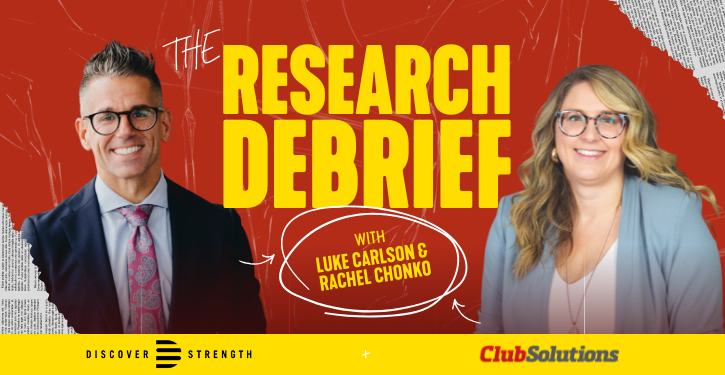
Hosts Luke Carlson and Rachel Chonko unpack a meta-analysis comparing self-paced strength training to tempo-controlled training, in which lifters use a metronome to intentionally slow both the lifting and lowering phases of an exercise.
Key discussion points include:
- What “corticospinal tract plasticity” means and why it matters for strength training.
- How self-paced training (the way most people lift) compares to metronome pacing, where reps are controlled at four to six seconds per phase.
- Why tempo-controlled training improved both the “accelerator” and “brakes” of voluntary muscle contraction across 12 studies, while self-paced and control groups showed no change.
- Why the tempo-controlled group saw significantly greater strength gains despite both groups getting stronger.
- Where the research goes next, including researchers’ hypothesis that injured populations, such as those managing tendinopathies, could see even greater benefits.
Why This Matters for Operators:
The takeaway for operators and trainers is straightforward:: coaching pace, not just coaching form or load, may be an underused lever for member results.
Key implications for operators:
- Coaching pace is a largely untapped differentiator, since almost no one in commercial gyms trains this way today.
- Slower, deliberate lifting and lowering is a free, scalable coaching tool that requires no new equipment.
- This research gives operators a specific, evidence-backed talking point to layer into staff training and member education.
- Potential relevance to injured or rehabbing population points to future applications for personal training and clinical adjacent programming, pending further research.
Listen or Watch:
Audio: Available on SoundCloud, Apple Podcasts and Spotify.
Video: Watch the full episode on YouTube.
Research Referenced in This Episode: