A landmark review from one of the field’s leading researchers reframes structured exercise as a clinical tool for preventing chronic disease and puts health club operators at the center of the solution.
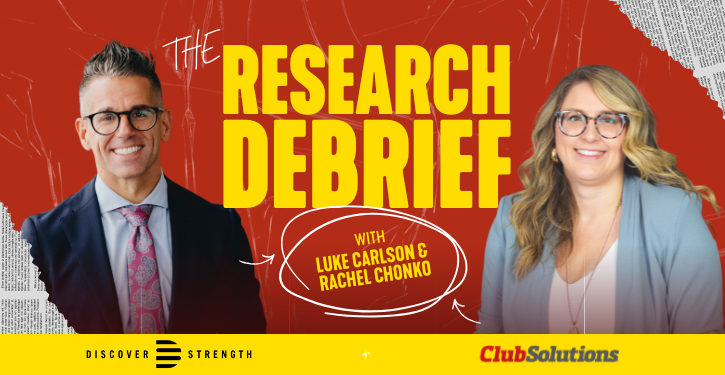
This episode, hosts Luke Carlson and Rachel Chonko break down the review published in Cell Metabolism by longevity and exercise physiology researcher Dr. Bente Klarlund Pedersen. They walk through five takeaways operators can apply directly to programming and member communication.
What This Episode Covers:
This episode unpacks the review’s core argument in five parts, moving from the paper’s central thesis to its practical implications for how clubs structure exercise.
Key discussion points include:
- Why the paper reframes exercise as medicine rather than general lifestyle advice, citing Pedersen’s assertion that structured exercise should be prescribed for non-communicable disease.
- Whey weight loss is a poor proxy for exercise’s health benefits and the seven physiological mechanisms through which exercise protects against disease.
- Why supervised exercise consistently outperforms unsupervised exercise in clinical outcomes, even when adherence is equal.
- Why the paper’s finding extend across a broad range of chronic conditions including type 2 diabetes, cardiovascular disease, colon cancer, COPD and cognitive decline.
- Why the researchers call for physical activity to be made enjoyable, convenient and social and what that means coming from a scientist rather than an industry voice.
Why This Matters for Operators:
The review’s finding show clubs already have the tools to deliver these outcomes, but need to message and structure their offerings more intentionally.
Key implications include:
- Supervision — whether one-on-one, small group or large group — is a measurable driver of clinical outcomes, giving operators an evidence-based case for personal training and coached group exercise.
- Positioning exercise around disease prevention broadly opens up a new messaging territory for member communication and marketing.
- The emphasis on making exercise “enjoyable, convenient and social” reinforces the value of member experience and retention strategy as a health outcome, not just a business metric.
- Operators don’t need new modalities to capture those benefits.
Listen or Watch:
Audio: Available on SoundCloud, Apple Podcasts and Spotify.
Video: Watch the full episode on YouTube.
Research Referenced in This Episode:
Exercise as a therapeutic intervention for long-lasting and chronic diseases