



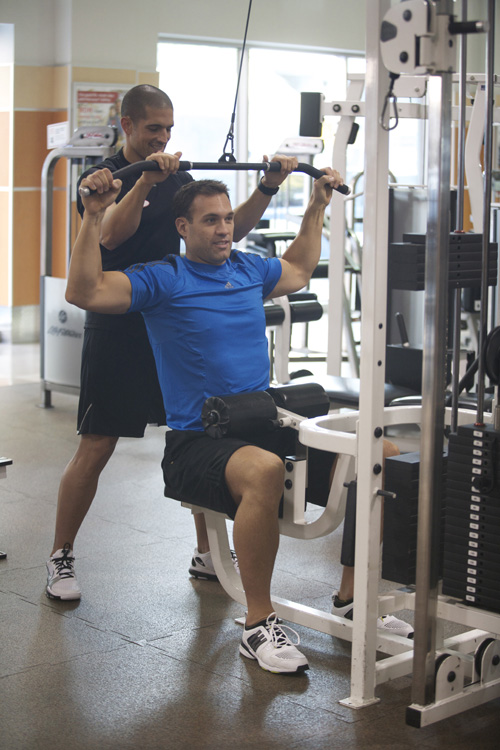
When a member walks the floor of your facility, they see personal trainers working with clients of all ages, shapes and sizes — hopefully the image they exude is one of confidence, professionalism and expertise. How can you be sure your personal trainers are knowledgeable in what they do? Accredited certifications, continued education credits (CECs) and drive, are key.
THE IMPORTANCE OF CERTIFICATIONS
Any personal trainer hired should be certified through an approved accredited organization. According to Sheila Gardner, the group fitness director at Gainesville Health & Fitness, certifications from accredited organizations result in a variety of desirable guarantees. “[Certifications] indicate that the instructor understands basic safety components, understands basic anatomy, understands proper body alignment and can properly design a class,” said Gardner.
At Greenwood Athletic & Tennis Club, Vic Spatola, the director of personal training, hires personal trainers with certifications from NASM and NSCA alone, in order to ensure his trainers speak a “common language,” when discussing clients and technique. “One of the major reasons we believe in both of these organizations is the type of education that empowers the trainer to deal with a multitude of clientele, from young to old, and from injured to athletic,” explained Spatola. “Not only are you assured what type of education the trainer has, but you are also confident. If all your trainers have the same certification there is a ‘common language’ all your trainers share when they discuss clients and conditions.”
For personal trainers, certifications are the most important factor to ensuring credibility. “As an industry, if we continue to hire trainers that have a zero knowledge base and credentials, we do a disservice to all of us who have chosen this field as a lifelong career,” said Spatola. By hiring trainers with proper and similar certifications, you’re ensuring credibility, professionalism and client satisfaction. In turn, also ensuring that members come to you to see results.
CONTINUING EDUCATION CREDITS
Your trainer’s education shouldn’t stop after their initial certification. “CECs are crucial,” said Michele Colwell, the vice president of operations, personal training services and health centers for GoodLife Fitness, Canada. “They are necessary because personal trainers need to know the most up-to-date fitness trends, health and wellness information and research, in order to provide effective and safe programming for their clients.”
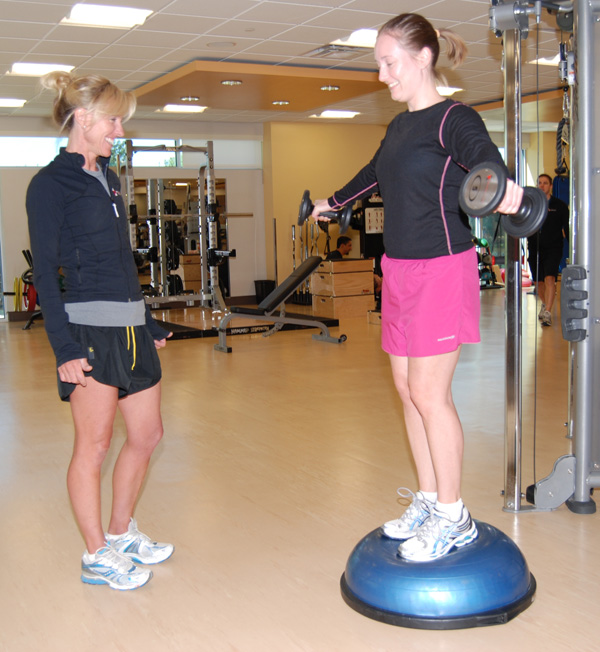
CECs range from a variety of different topics, such as nutrition, or physical therapy. According to Spatola, many CECs teach trainers how to use specific training tools, such as TRX Suspension Training, and BOSU or Power Plate techniques. “CEC knowledge is where a trainer can truly grow their knowledge base and groom themselves for success,” said Spatola. “Base certifications deal with generalities and major training philosophies. These certifications are crucial, but cannot provide all the specific information to deal with common issues, such as injuries, special populations or sports-specific training. This is where the trainer, by doing these specialty CEC’s, can position themselves to become experts in a field.”
According to Colwell, GoodLife Fitness requires personal trainers to receive a minimum of four CECs per year, and awards CECs as a part of its employee recognition program and as employee incentives. “Ongoing learning and certification is essential in helping personal trainers expand their client base and continue to develop and refine their skills to help clients achieve the best results possible,” said Colwell.
CECs work to make sure your personal trainers are up to date on the latest developments in personal training. According to Todd Galati, the director of credentialing for ACE, this is common in almost all health-related fields. “By completing continuing education courses, a professional can stay up to date with the latest industry research, guidelines and best practices,” he said. “Maintaining continued competence is critical to maintaining a standard of care, and protecting the public from harm, which is why continuing education is required to maintain credentials in most professions, including fitness, nursing, medicine, physical therapy, accounting, law and many other fields.”
WHAT YOU CAN DO
Although continued education credits should be a priority for personal trainers, clubs should make CECs as accessible to trainers as possible. At Gainesville Health & Fitness, it’s a company effort to push continuing education for personal trainers. “We offer in-house trainings and workshops — many of our staff are qualified to teach seminars in anatomy and physiology, occupational therapy, group leadership and management, proper body mechanics, etc.,” said Gardner. By doing so, she explained, “It is much more cost effective when you consider the time and travel to go out of town. You are assured that instructors are teaching classes that are safe, effective, fun and motivating.”
Along with additional certifications, GoodLife Fitness’ personal trainers are required, at minimum, to train at the GoodLife Personal Training Institute (GLPTI), a certification program developed by the company in partnership with canfitpro™. According to Colwell, through the GLPTI, trainers are taught comprehensive program content and a wide range of skills that guarantee success. “Fitness clubs must also be committed to supporting and requiring ongoing training, development, education and certification of their trainers, so that they will be providing the most up-to-date and safest training environment possible for members,” explained Colwell. “Empowering your trainers with great educational programming will also encourage greater staff engagement, increased productivity and higher retention.”
Greenwood Athletic & Tennis Club also continually provides CEC workshops for its trainers. “Whether we go to a equipment vendor (i.e. Power Plate or TRX) or we purchase CEC courses from an education provider (for example, PTontheNet), the club provides information to keep their trainers on the cutting edge of the industry,” said Spatola. “This does not necessarily cost anything to the club either. Ask your equipment vendors, if you make a purchase, what type of CEC they can provide to your training staff.”
To guarantee the continued education and growth of your personal trainers, hire those who have a thirst for knowledge, who wish to grow their expertise to the club and clients’ benefit. “Personal trainers must also take responsibility for their own training and development,” said Colwell. “While it is important for the fitness company to provide the foundation for a trainer to be successful, it is their responsibility to build and develop their career as a fitness expert. A trainer should recognize the value and great return on investment that comes with getting progressive certifications and continuing to expand their knowledge and skill set.”
Personal trainers are the ones that interact with members on a personal level — sweating, pushing and encouraging members as they work hard to meet their goals. Who do you want representing your club? By hiring properly certified instructors with a drive to better themselves, and by helping them further their education, you’ll guarantee your personal trainers are experts in the industry, and members will come to you for that expertise.
By Rachel Zabonick
Stay ahead in the fitness industry with exclusive updates!
Subscribe Now
Rachel Zabonick-Chonko is the editor-in-chief of Club Solutions Magazine. She can be reached at rachel@peakemedia.com.


![[solidcore] ascend](https://clubsolutionsmagazine.com/wp-content/uploads/2026/09/web_SHOT_24_declinepushup_1596EDITC-copy-350x250.jpg)


Thanks for the information. This explains the importance of getting the help of a professional trainer when doing workouts. I usually try to do it on my own just by pure research but it made me realize that I may be at a greater risk of injury. This changes my perception about hitting the gym.