
As the fitness industry looks ahead to 2026, it’s clear the future of clubs will be shaped less by equipment and more by experience.
In the latest Thought Leaders panel, industry leaders reflected on trends from the past year and what they predict will be in store for 2026
Laurie Smith, the COO of ACAC Fitness and Wellness, framed 2026 as a year where operators must fully embrace personalization for both members and staff. Smith pointed to the growing importance of community across age groups, noting younger members are increasingly seeking social spaces that replace traditional nightlife, while older members come to clubs for connection as much as exercise.
“A lot of us who run multi-purpose clubs have always been focused on creating community within our walls and the communities outside our walls,” said Smith. “I think that’s going to continue to be more important than ever.”
Mel Kleist, the CEO of East Bank Club, focused on consolidation and elevation for his 2026 predictions. He noted members are choosing fewer spaces but are expecting more from them.
“People are consolidating to one club,” said Kleist. “We have to provide a lot of different conveniences beyond just exercise and cardio and weights.”
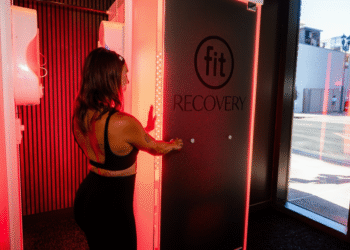
For Kleist, that means expanding into nutrition, recovery and hospitality level wellness experiences.
Cher Harris, the president of the Club Division at The Houstonian, emphasized wellness in 2026 will be driven by longevity with offerings from strength training to biomarkers to recovery services.
“Instead of looking at the outside picture of themselves, they’re looking more inside,” she said. “Longevity and biomarkers and GLP-1s and HRT — these things are affecting our bodies from the inside out.”
Harris shared how — with all the research that has been done — strength training will continue to be a trend into the new year with both Gen Z and women. “More than ever, women are strength training, which is a great trend that will continue because the research is there,” she said.
Maria Gonzalez, the CEO of ClubFitness Greensboro and HFA board member, drew from her international travel and firsthand experience with wellness cultures abroad.
She identified young adult memberships as one of the main growth areas for ClubFitness and the fitness industry as a whole. “We created a membership for young adults age — 18 to 29 — and we are just seeing a high spike on interest from that group that we really did not have before,” she said.
She also noted recreational social fitness as one of her top predictions for the new year, explaining how pickleball, golf simulators and shared recreation are essential tools for multi-generational engagement. “Find ways that people are going to come to the club, even if it’s not to exercise per se, but just to meet with their friends and have a reason for it,” said Gonzalez.
On the technology side, Smith sees AI as a game changer for retention and engagement. “We have more data than ever. It can be more specific to the clients we’re serving,” said Smith. “Instead of killing them on the floor with a workout their body is not ready for, we can personalize and really give them the program they need.”
While optimistic about AI, Harris urges operators to be cautious when using it. “Make sure you do your research, make sure you’re using tools that are private and make sure you’re educated on AI,” she said.
Gonzalez was clear that technology will only replace trainers who fail to connect. “If I do have that connector — that person who’s paying attention, sending messages, really developing the program — people will be willing to pay even more, because the human connection cannot be replaced by an app,” she said.
As her last piece of advice, Smith warned operators not to undersell their value. “Don’t underestimate your pricing power. Historically, our industry has undervalued ourselves. Know your value, be proud of your value and charge for it,” she said.
Kleist also echoed a point the other panelists made in that differentiation must come from added value, not discounting. “Trying to compete for the bottom of the barrel is a bad business model,” said Kleist. “Every year, we focus on how we can add more value and differentiate ourselves.”
The message of the panel was clear — the clubs that thrive in 2026 will be those that invest, personalize, price confidently and emphasize the human relationships at the heart of fitness.