Andy Peat, CEO of Fitness On Demand, explains why a smart gym reinvestment strategy — including strength upgrades, recovery tools and tech adoption — is critical to staying competitive in today’s fitness market.
As the health and fitness industry continues to evolve, Andy Peat, the CEO of Fitness On Demand, has a clear message for club operators: reinvention is essential, and hope alone won’t cut it.
Drawing from his leadership at Fitness On Demand, Peat is seeing consistent patterns across the global fitness landscape. Chief among them: too many independent clubs are failing to reinvest in their facilities.
“In particular individually owned ones, whether they’re independent gyms or franchise gyms, they’re just not reinvesting into the gym,” said Peat. “They’re getting tired, they’re getting old … they’re just not adapting to the times.”
Peat warned that without reinvestment — especially in modern strength equipment and recovery options — clubs risk stagnation and eventual decline. “You’ve got to have a really hard conversation with yourself as a gym owner … Do I actually want to do that? Or do I want to call it quits and let someone else do it?” he said. “If you’re not happy and you don’t do anything, nothing will change. Hope is not a business strategy.”
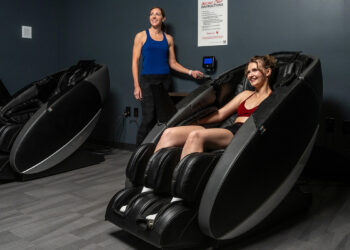
Fortunately, reinvention doesn’t have to break the bank. Peat emphasized that simple updates, like adding squat racks or converting dead space into a recovery zone, can go a long way. “Squat racks aren’t that expensive,” he said. “Recovery tools aren’t that expensive. It’s just sometimes a little bit of creative thinking.”
He pointed to recovery and strength training as two of the biggest trends shaping member expectations — especially among Gen Z, who he noted are poised to become the industry’s dominant consumer base. “They expect a lot more than what millennials did in terms of product,” he said. “They grew up with the internet. We are seeing gyms become this third space in their world behind home and school. You have to adapt to that.”
Another key growth area is hybrid fitness — but not in the traditional sense of digital vs. in-person. Peat said the term has evolved to reflect a more integrated, personalized experience.
“It’s not just do a class at home or do a class at the gym. It’s actually more truly hybrid,” explained Peat. “I might go to the gym, for example, and I might follow a five-minute warm-up on a screen before I do squats and deadlifts.”
According to Peat, members want support both inside and outside the club. A recent survey of 250,000 Fitness On Demand users found that 41% of members wanted at-home fitness content included as part of their gym membership. “For me it’s about meeting people where they are. And as a gym … I would like that gym to provide me with those tools,” he said.
Peat believes artificial intelligence (AI) will play an increasing role in delivering this personalization — from fitness content to customer engagement. “They’re looking at their phone and asking for fitness advice,” he said. “Gyms should be leveraging their vendors … to put [their equipment] into AI and allow the members to use it.”
He added that even outside traditional gym platforms, consumers are already relying on AI tools like ChatGPT for training tips, nutritional guidance and fitness journaling. “I would like AI to essentially take the data of my journaling and then do something interesting with it,” said Peat. “Say, ‘Hey Andy, if you want to bench press 30% more in six months, here’s the path to get there.’”
While challenges exist, Peat remains highly optimistic about where the fitness industry is headed. “There is a lot of confidence in the market right now,” he said. “The fitness industry is here to stay. It’s growing. It’s going to continue to grow.”
His advice for operators is simple: don’t get stuck. Evolving doesn’t have to be expensive — but it does require action and intent. “My advice is the industry’s growing. How are you going to grow with it?” said Peat.
And if you’re unsure where to start? Reach out. “Even if you have no desire for any of our products, feel free to reach out,” said Peat. “We’re always willing to talk to people about what we think works and doesn’t.”