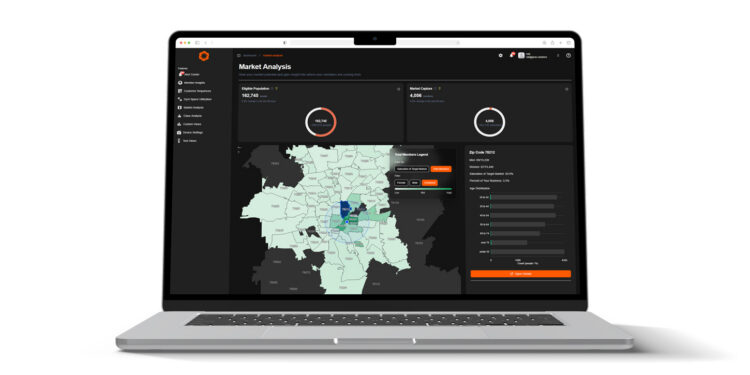
By unifying member and operational data, Groe Solutions gives fitness operators clearer visibility into churn risk, staff action and more by using AI and computer vision as the engine.
Most gyms do not have a lack-of-data problem.
They have a lack-of-visibility problem.
Operators are expected to make decisions about retention, staffing, equipment, class performance and member experience without a clear view of what is actually happening across the business. They may have attendance data in one system, purchase history in another, CRM notes in a third and security footage sitting unused in the background. The result is a patchwork view of the gym and a lot of guesswork.
That is the problem Groe Solutions was built to solve.
Founded in December 2023 by Alantheus Thompson and Nick Pizzuti, Groe helps fitness operators unify fragmented gym and member data, turn it into usable insight, and act on it in ways that improve operations and the member experience. AI and computer vision power the platform but the core promise is more practical: better visibility, better decisions and stronger retention.
One Source of Truth for Gym Operations
According to Thompson, data fragmentation is one of the industry’s most common operational challenges. “How much of a problem data integration is, that’s really across the board no matter what the club size is,” he said.
Groe starts by connecting the systems operators already use.
“Step one, we come in and glue the systems together,” said Pizzuti. “We make sure you have a single source of truth for every piece of information in your system. Make sure everything is aligned across everything you have running. Our system collects data from every other piece of software a gym owner has and brings it all into one cohesive data model.”
That foundation matters because operators cannot improve what they cannot clearly see.
Who is at risk of churning? Which members are most valuable? Which programs are driving retention? Which parts of the facility are underperforming? Where are small operational issues quietly damaging the member experience?
Those are the questions Groe is designed to answer.

Turning Data Into Action
Once the data is unified, Groe applies AI to help operators pull insights across systems without manually stitching information together.
That allows staff and leaders to better understand a member’s full story — attendance, purchases, onboarding history, engagement patterns and more — rather than relying on isolated signals.
“You’re not going to have all of their purchase history, the transactions, the classes they’ve attended, every check-in, the onboarding questionnaire — you’re not going to have all that in one system unless you have everything integrated,” said Pizzuti. “And so, once you do have all that in one system, you can really personalize the experience.”
That is a key part of Groe’s positioning. The goal isn’t to replace the human side of fitness with automation. It’s to help staff deliver a more personal experience at scale.
“People can’t process that amount of information,” said Pizzuti. “Computers can. And now with AI, they can do it well.”
Thompson summarized the offering simply: “We unify operations and member data and enable it with AI to improve operations and member experience.”
Retention is the Real Business Problem
For Groe, retention is where operations and member experience meet.
Gyms rarely lose members because exercise stopped mattering. They lose members because the overall experience becomes inconsistent. Staff miss opportunities to engage. Equipment stays down too long. Class energy drops. Members feel unnoticed. Small friction points pile up until someone leaves.
Groe is built to help operators catch those issues earlier and respond more effectively. Thompson sees that as part of a much larger mission.
“There’s $192 billion in U.S. health care costs and declining military readiness, and it’s all attributed to physical inactivity,” said Thompson. “We see gym retention as a lever we can pull to address these much larger problems while making gyms more profitable by keeping people adhered to their fitness and health routines.”
That mission may be broad, but the day-to-day application is operational: help gyms keep more members engaged by giving operators and staff better information and clearer next steps.
Computer Vision Adds a New Layer of Operational Insight
What makes Groe especially distinctive is its computer vision capability.
Data unification and AI already help operators understand what is happening in their business. Computer vision adds insight into what is happening inside the facility in real time.
“When you add in the computer vision, we’re adding one more layer of data on top,” said Pizzuti. “Which is not just, ‘here’s what they’ve bought, here’s what they’ve attended, etc.’ It’s, here’s their preference when they’re inside the gym.”
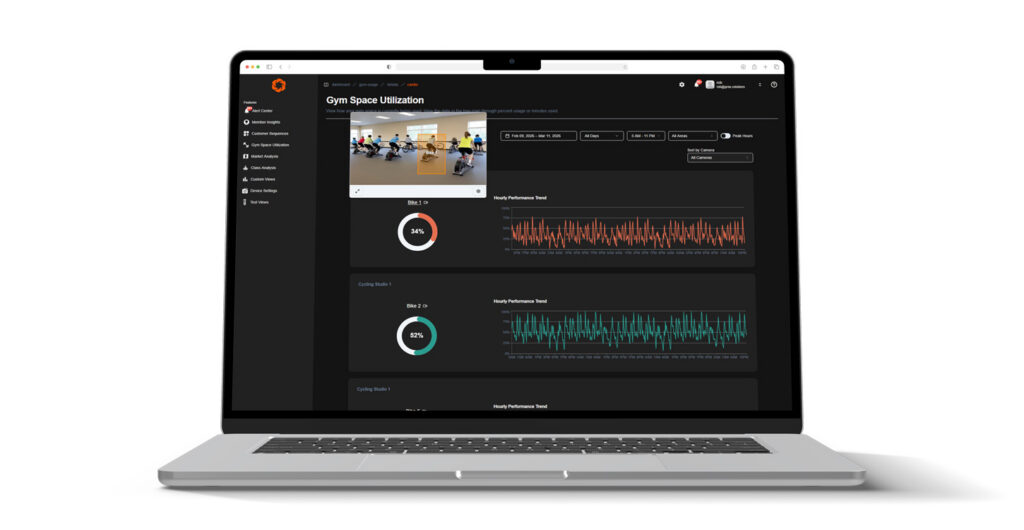
That layer can help operators track equipment issues, monitor rack weight depletion, flag tailgating, measure class attendance, analyze traffic flow and surface other operational issues before they turn into member experience problems.
“Is equipment being underutilized? Are you running low on towels? Are people tailgating? How many people are entering into this space of the gym at a certain time? Is this machine broken?” said Pizzuti. “All of that improves the member experience, but it doesn’t tie to a single member. And you can only get that data through computer vision.”
For operators making CapEx decisions, that visibility can be especially useful. Knowing what equipment is actually being used and when can shape purchasing, layout and staffing decisions with much more confidence.
Thompson also pointed to missed front-desk sales as another common blind spot that most operators suspect exists but struggle to measure.
“If you think you could monitor it by watching your security cameras and it’s something you want, talk to us about it,” said Pizzuti. “Because you’d probably be surprised at how quickly we could roll it out.”
A Grounded Approach to AI
In a market crowded with AI claims, Groe’s founders are careful not to over-romanticize the technology.
“We’re very focused on creating value for the business owners, we’re not building just because, ‘oh, this is cool,’” said Thompson. “Yes, it’s cool. It’s very cool. But is it cool and valuable? And we’re making sure we’re getting that feedback.”
Pizzuti put it this way: “It doesn’t matter how it’s working under the hood. It matters what impact it’s having, what problem it’s solving.”
That attitude may be part of the company’s appeal. Groe is not positioning AI as magic. It is positioning it as a tool that helps gym operators run smarter businesses and helps staff deliver better member experiences.
Built Around Trust
Because the platform touches member and operational data, trust is central to the conversation.
“My background is in aviation, and it’s always, ‘you go to the strictest requirement,’” said Thompson. “So that’s what we did with data.”
Pizzuti said the company works closely with customers to create clear, transparent data agreements. “We don’t just want to absorb your data and claim that it’s ours and then use it forever,” he said. “We really do work with our customers to make sure the data agreements are what they’re comfortable with.”
That focus is especially important when computer vision enters the conversation. For Groe, transparency isn’t just a compliance issue. It is part of the product strategy. Operators and members need to trust that the technology is being used responsibly and in service of a better experience.
More Than a Tech Story
Groe may be an AI and computer vision company, but that’s not the most useful way to understand it.
At its core, it is an operational platform for gyms that want clearer visibility into what drives retention, better tools for staff action and a stronger handle on the everyday decisions that shape member experience.
“I can say pretty comfortably we’re the only ones doing what we do,” said Pizzuti. “There are other companies out there that do computer vision in different industries. There are other companies that do AI and fitness, but they don’t include computer vision.”
For operators dealing with disconnected systems, unclear churn drivers and operational blind spots they can feel but cannot measure, Groe’s pitch is simple: see more clearly, act earlier and create an experience members want to come back to.
That adherence is where retention starts and we begin moving the dial on national health and security.