
Two clubs. Two models. One shared lesson about building revenue streams that strengthen rather than strain the member relationship.
For many fitness operators, the conversation around revenue has shifted from simply growing memberships to maximizing the value of each member relationship. The challenge is finding ways to expand revenue streams without creating an experience that feels overly transactional. Clubs that balance profitability with hospitality while offering services members genuinely want are best positioned to preserve the sense of community and convenience that keep those members engaged long term.
That balancing act is playing out differently at clubs across the industry. Some operators are doubling down on bundled, all-inclusive models designed to increase utilization and retention, while others are strategically layering premium add-ons and ancillary services that elevate spend per member. Both approaches can work when they align with the club’s identity and member expectations.
At Fit Athletic in San Diego, their philosophy centers on minimizing friction. Jordan Goll, the general manager of Fit East Village, said the club intentionally bundles most amenities into one membership price because leadership believes members should be able to experience it all together.
“We’ve always believed that once someone walks through our doors, they should be able to fully experience the club without constantly hitting another paywall,” said Goll. “A lot of clubs unintentionally create friction by monetizing every touchpoint and over time that starts to change the member experience.”
Under that model, recovery tools, Pilates and specialty classes are all included in the membership. The only major additional cost is personal training, which Fit Athletic views differently because of its individualized nature.
“It’s built around human expertise and time,” said Goll. “Training becomes an added layer of personalization and accountability, not a gatekeeper to accessing the overall experience.”
The upside, according to Goll, is that members engage with more aspects of the club, strengthening retention and increasing lifetime value even if the club gives up some short-term ancillary revenue opportunities.
That perspective reflects a growing industry reality where revenue per member is more about how deeply members integrate the club into their lifestyle.
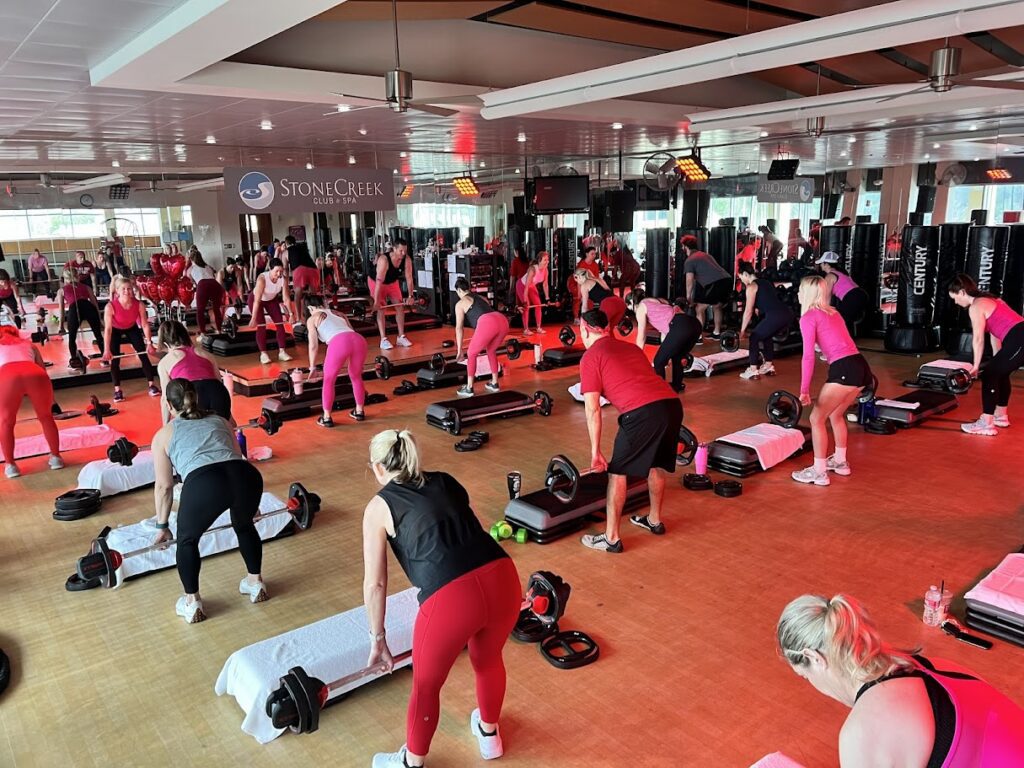
Stone Creek Club and Spa in Louisiana has taken a different but complementary approach. The upscale club generates roughly 35% of its revenue from non-dues sources, including spa services, food and beverage, retail, training and tennis programming.
Marvin Gresse, the general manager of Stone Creek, said ancillary revenue works because it fits the expectations of the membership base and enhances the overall experience rather than distracting from it.
“I think you have to know what your market is and know what your member wants,” said Gresse. “Our price point and our selling point is different than another club who’s more family focused.”
Stone Creek’s spa has become one of its strongest profit centers, generating nearly $1 million annually. The club has continued reinvesting into the space as the demand has grown, adding enhanced amenities, premium offerings and group experiences.
“We saw the trend for the parties getting more packed,” said Gresse, describing how member behavior drove the addition of higher-end champagne service and upgraded outdoor spa spaces. “The members show us where they’re interested.”
Responsiveness to member behavior is one of the biggest lessons for operators looking to build additional revenue streams. Successful ancillary businesses are rarely created in isolation. Instead, they evolve from understanding how members already use the club and identifying opportunities to deepen engagement.
Stone Creek’s fascial stretch therapy program is another example. Gresse said the club invested heavily in training and education before launching the service, sending staff to Arizona for intensive certification training. The program now represents a significant portion of the club’s training revenue.
“We don’t like to be the guinea pig,” said Gresse. “I try to always talk to folks who have done it. What do you do? Usually the first thing is, ‘Let me tell you what not to do.’”
The willingness to research, test and adjust is a critical because not every revenue stream succeeds. Gresse pointed to hydromassage as a concept that failed to gain traction at Stone Creek despite success at other clubs. Both Goll and Gresse emphasized intentionality over simply monetizing every service.
“Don’t just look at what you can charge for, look at what you want members to consistently use and come back for,” said Goll. “Sometimes the amenity itself is more valuable as a retention tool than as a standalone profit center.”
That idea becomes especially important as operators evaluate how secondary revenue impacts retention. According to Gresse, members who participate in programming and spend beyond dues consistently stay longer.
Still, profitability depends on delivering those services well. Gresse said staff quality, training and hospitality are the real drivers behind revenue success. Whether it’s a personal trainer, massage therapist or cafe employee, the employee experience directly shapes the member’s willingness to spend more time and money in the club.
Ultimately, the most effective revenue strategies are the ones that strengthen the member relationship rather than strain it. For some clubs, that may mean simplifying pricing and bundling amenities to drive utilization and retention. For others, it may mean carefully layering premium experiences that align with member demand and club culture.
In either case, the common denominator is intentionality. The clubs generating the strongest revenue are not simply adding services for the sake of another profit center. They are building ecosystems that encourage members to engage with the club longer and view it as an essential part of their daily lives.