
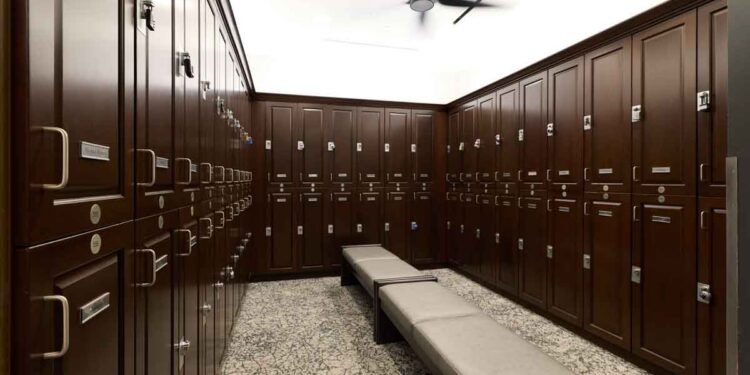
Orchard Hills Athletic Club, Weymouth Club and Village Health Clubs and Spas share how they’re prioritizing durability, capacity and member-focused details over expensive finishes in their locker room renovations.
Locker rooms used to be treated as an afterthought — a place for people to change clothes and move on to the workout. Now, they’re considered a key part of the member experience, from recovery and wellness amenities to a more comfortable, private and convenient environment.
But that doesn’t mean every locker room needs the latest technology or the priciest finishes. Operators at Orchard Hills Athletic Club, Weymouth Club and Village Health Clubs and Spas agree the best locker room investments are the ones that members actually notice and use, and that make sense for the club to operate and maintain.
That distinction matters for any club weighing a renovation. A premium locker room means spending with intention, not just spending more.
Orchard Hills Focuses on Functionality
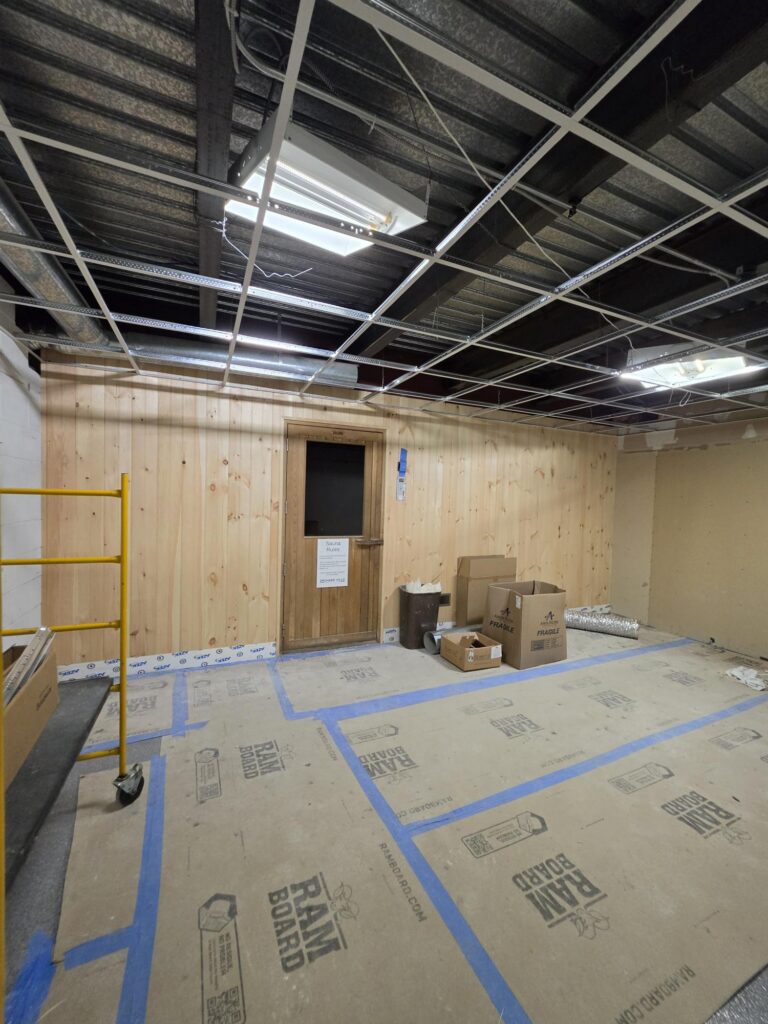
For Orchard Hills, that is what is guiding its first complete men’s locker room renovation in more than two decades. Rather than just replacing dated finishes, the club is looking at the space as a whole, how it functions every day, how durable the materials will be and which improvements will make the biggest difference to the experience.
“For us, it really starts with understanding how members actually use the space,” said Brittney Truman, the director of front-end operations at Orchard Hills. “You can spend a lot of money making something visually impressive, but if it doesn’t improve comfort, functionality or the overall experience, it’s not going to be an investment.”
Orchard Hills takes a similar measured approach to technology. The club didn’t add things like digital lockers or occupancy sensors because they wanted to prioritize simplicity and ease of use with its wide range of member ages. They still monitor locker room occupancy, but staff handle that operationally rather than through an automated system.
The same discipline shapes the club’s ROI calculations, which go beyond direct revenue. Orchard Hills considers how many members will use an amenity, how frequently they’ll use it and whether it improves long-term maintenance and operations.
Weymouth Club Targets Spending Where It Matters
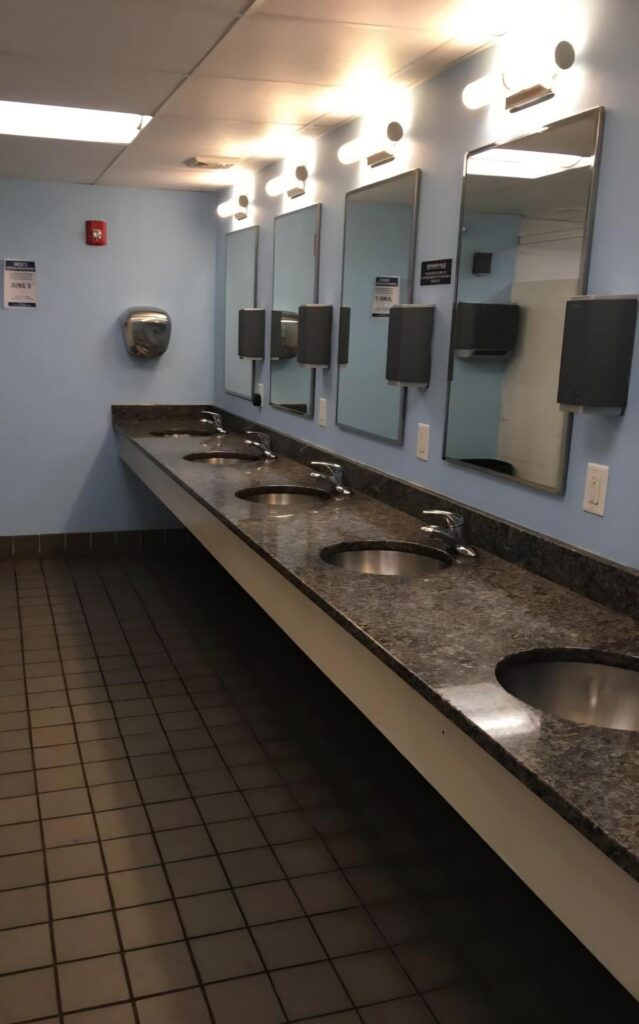
Weymouth Club approached its renovation from a similar perspective. Between 2021 and 2022, the club completely overhauled its five locker rooms, gutting the main and aquatics locker rooms and doubling the size of its family locker room.
The motivation was partly to bring the physical environment in line with the price of membership. At $130 per month for an individual membership, the club felt its existing finishes weren’t communicating the quality members were paying for.
The renovation added private changing rooms in the family locker room, more bathrooms and showers, and upgraded finishes. Bust some of the most member-focused improvements were the smallest — a fold-down stool at the sink so young children could reach it and wash their hands independently, upgraded soaps and shampoos, higher-quality towels and installed shower doors in the women’s locker room.
“It was a great little touch that people really appreciated,” said Jeff Linn, the executive director of Weymouth Club.
Those details show an important point in that convenience can be a premium amenity in itself.
Weymouth also paid close attention to capacity. Member feedback had identified problems with the number of showers and toilets available during peak periods, so the club looked for opportunities to add more. Linn advises other operators to do the same rather than sacrificing basic capacity in favor of a more visually impressive feature.
“Really watch your volumes and make sure as you’re going through the process that you don’t shortchange a toilet or short a shower,” said Linn.
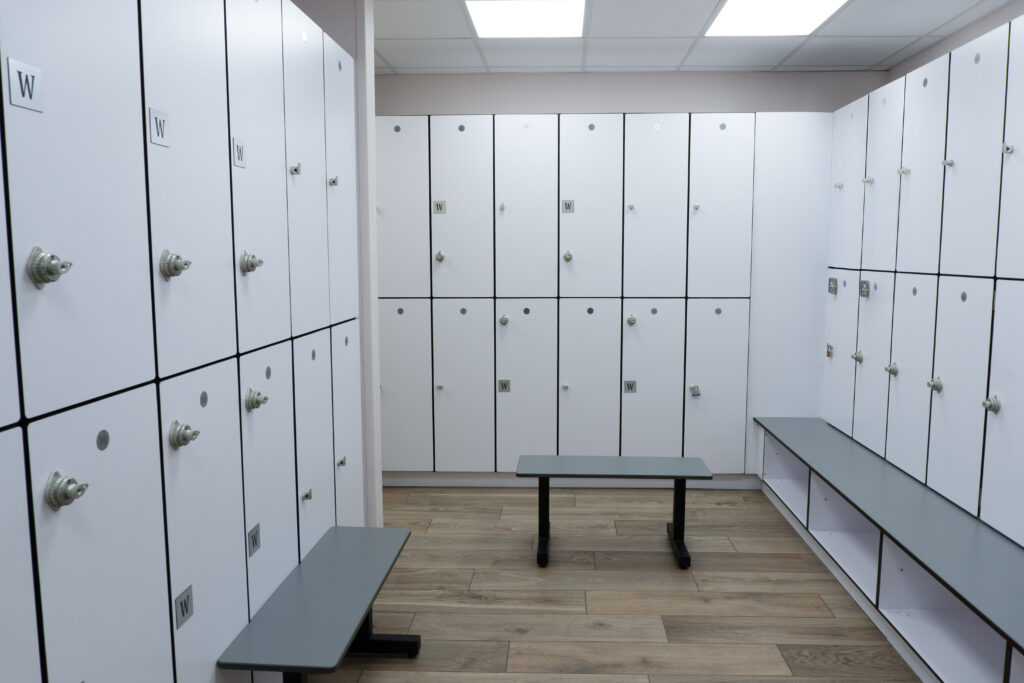
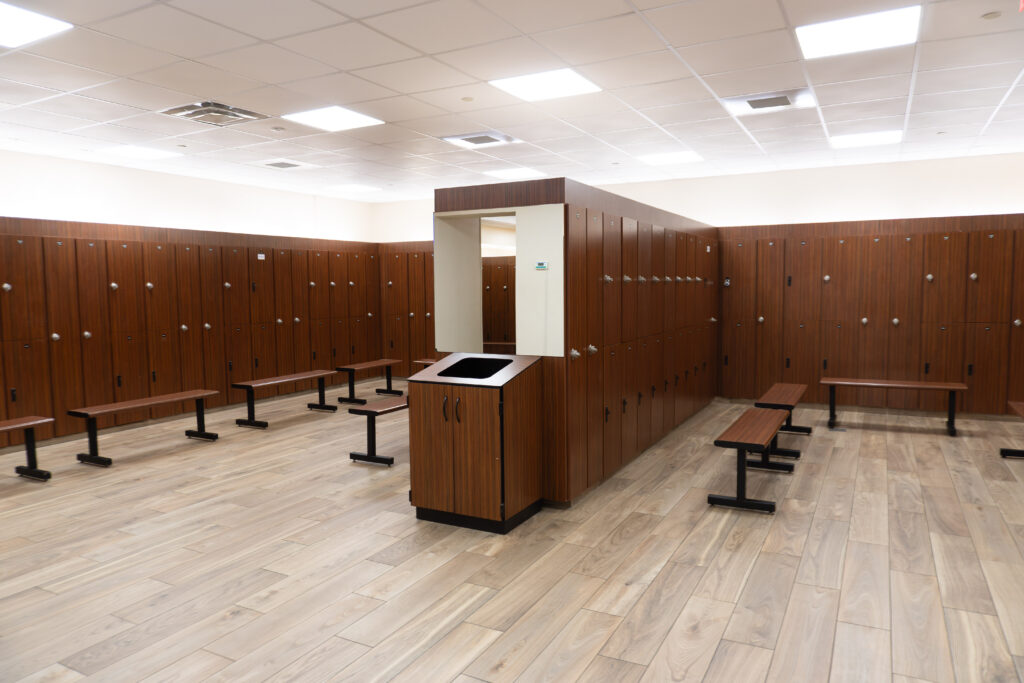
One of the easiest ways for a locker room project to become unnecessarily expensive is assuming every element needs to be replaced or upgraded. Weymouth resisted that approach. The club kept its existing lockers in the main locker rooms because they remained in good condition. In the aquatics locker rooms, they selected different lockers because the more corrosive environment required a material better suited to long-term use.
That same thinking applied to finishes. Weymouth used higher-end materials selectively in areas where they would have the greatest visual impact.
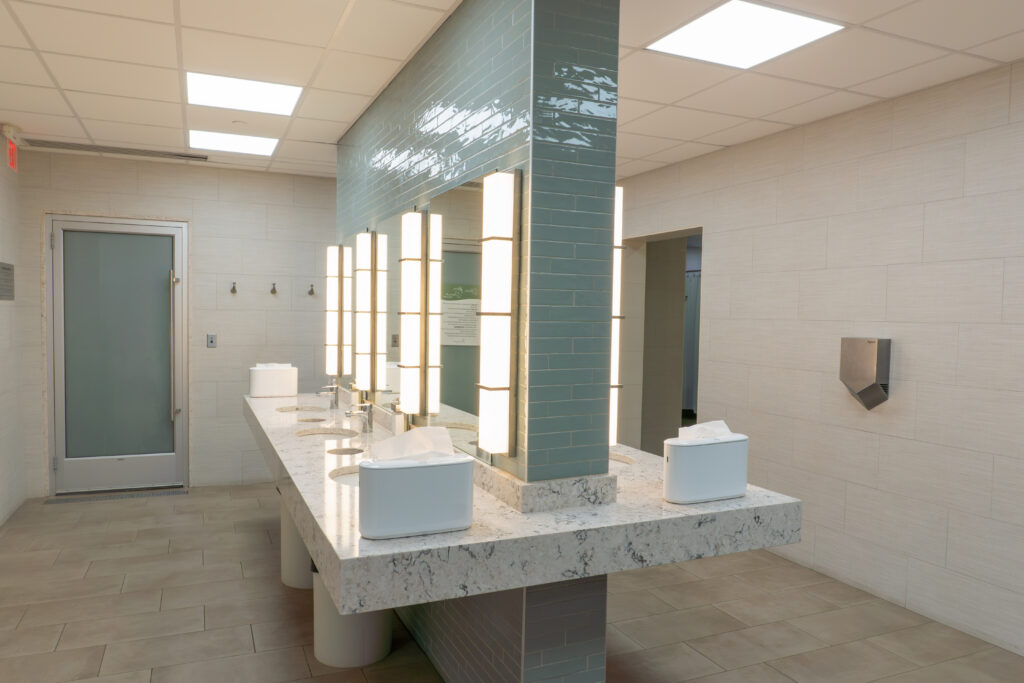
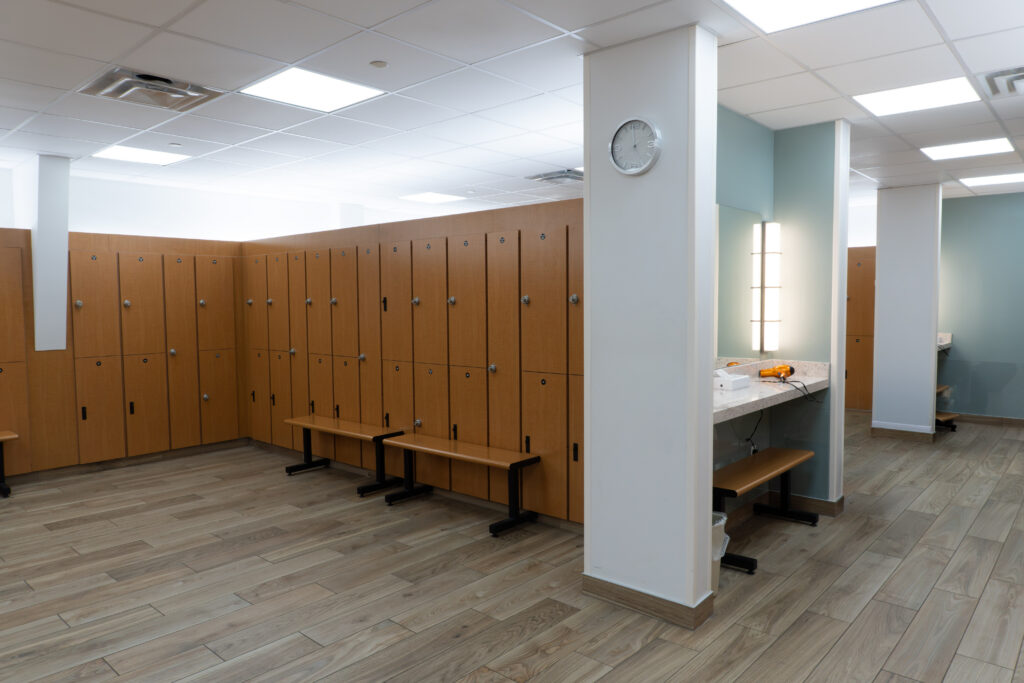
Lighting is another example. Weymouth used lighting above lockers, in showers and around mirrors to enhance the finishes already selected. Linn said lighting in an area can go a long way toward elevating the quality of the space for the cost.
Village Health Clubs Expands Wellness Amenities
Village Health Clubs demonstrates how locker rooms are becoming destinations in their own right.
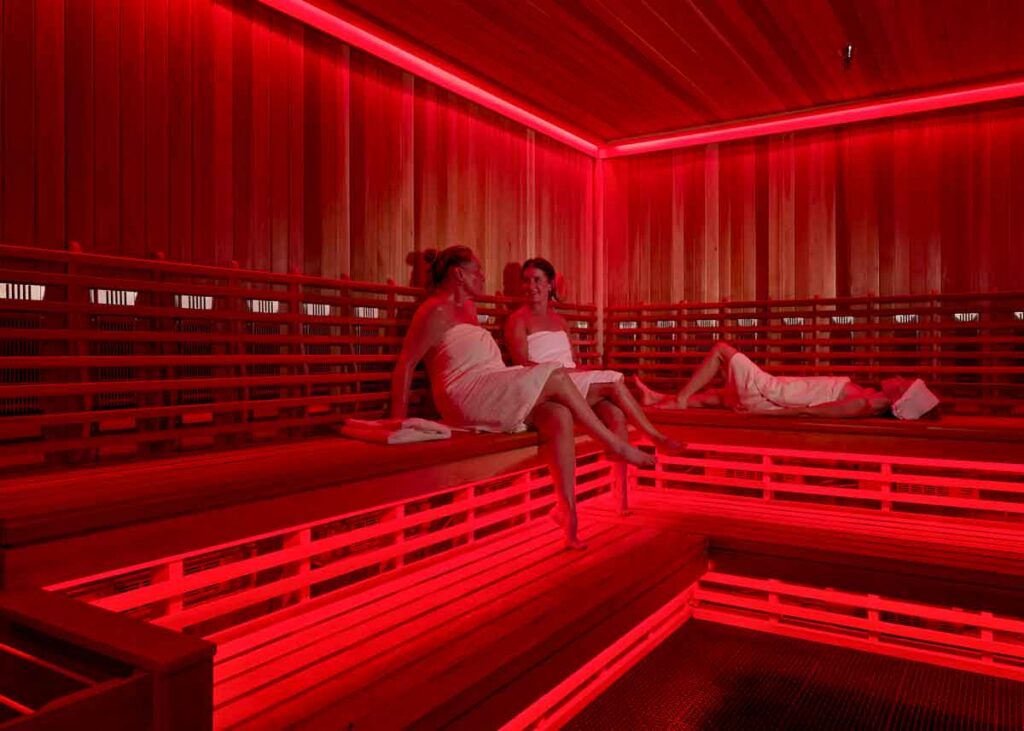
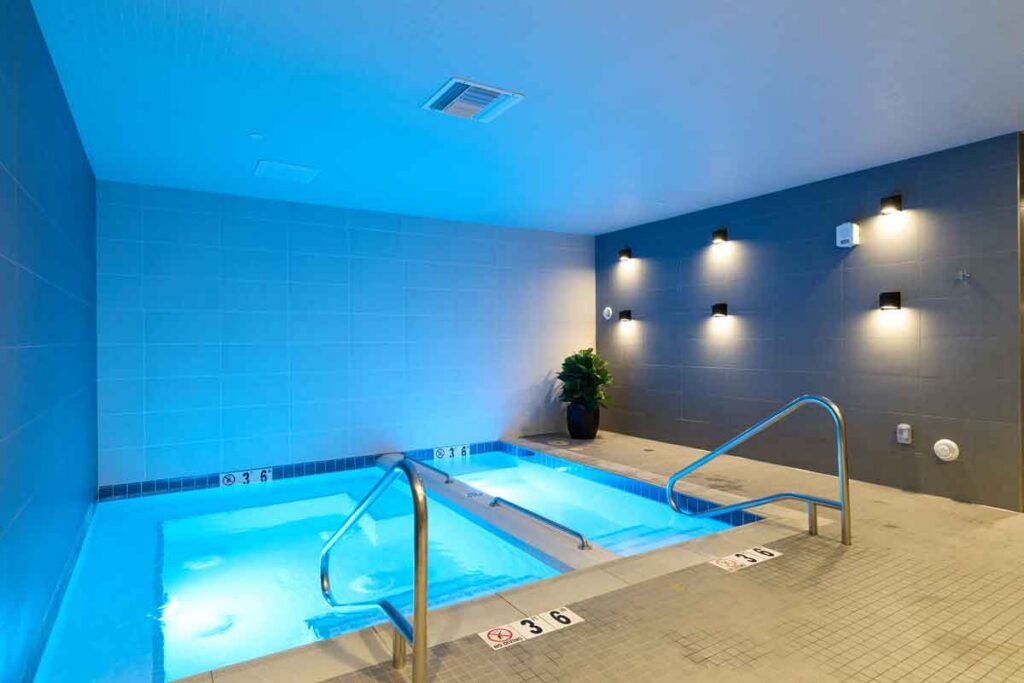
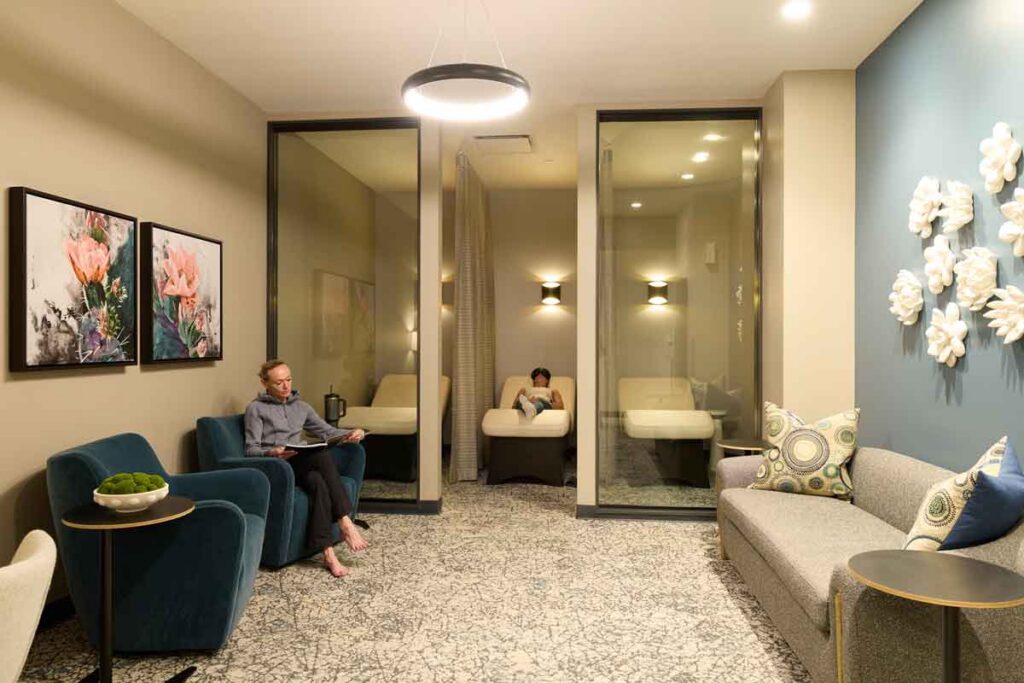
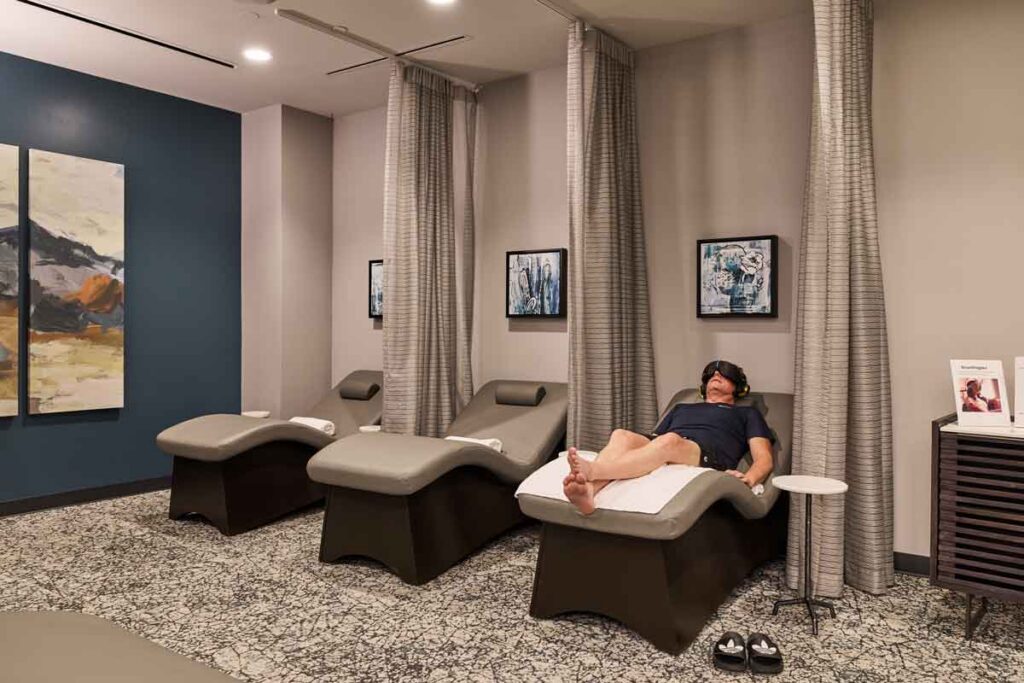
At the DC Ranch location, the club undertook a roughly $3.5 million renovation after about 20 years without a major remodel. The project added in-ground cold plunges, infrared and other sauna experiences, red light therapy, lounges and sleeping rooms.
The additions were based on what members were already seeking outside the club. Village Health Clubs researched popular offerings and found that contrast therapy and cold plunges were among the most sought-after options, followed by infrared saunas.
“We like to give our members everything under one roof,” said Carol Nalevanko, the president of Village Health Clubs. “We don’t want them going somewhere else or paying extra for something.”
The sleeping rooms are another example of thoughtful amenity design. The club decided to create quiet spaces with lounge chairs and curtains where members can read, relax or nap instead of filling them with more entertainment.
But Village Health Clubs also learned that ambitious renovations require realistic planning. The DC Ranch project took nearly nine months and ultimately cost about $1 million more than the original estimate due to issues that had been revealed once the project got started.
“We thought it was going to be maybe two and half million,” said Nalevanko. “But we were tearing out walls and stuff of a 20-year-old building, so we found lots of surprises like pipes and things like that we needed to fix and have it last for another twenty years.”
And despite the extra cost and the longer timeline, the reward was the feedback.
“The feedback once we opened these locker rooms, it was unbelievable,” said Nalevanko. “We started beating our sales goals and the whole attitude of the club was like ‘we love this thing.’”
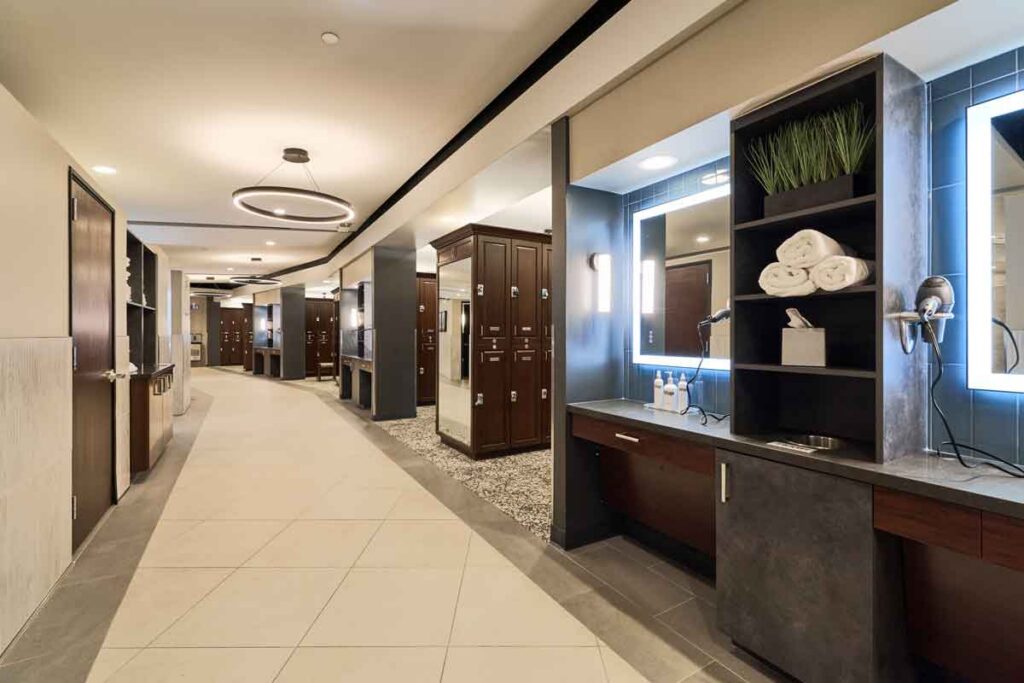
Prioritizing Durability
Across all three clubs, durability emerged as one of the most important — and least glamorous — parts of locker room design.
A locker room is a difficult environment. Water, humidity, cleaning products, constant traffic and housekeeping equipment can quickly expose weaknesses in materials. And choosing which materials to put in the first place can be tricky.
“You don’t want it to look institutionalized. It has to look very high-end,” said Nalevanko. “But then you have to be able to do that by using durable material that looks nice.”
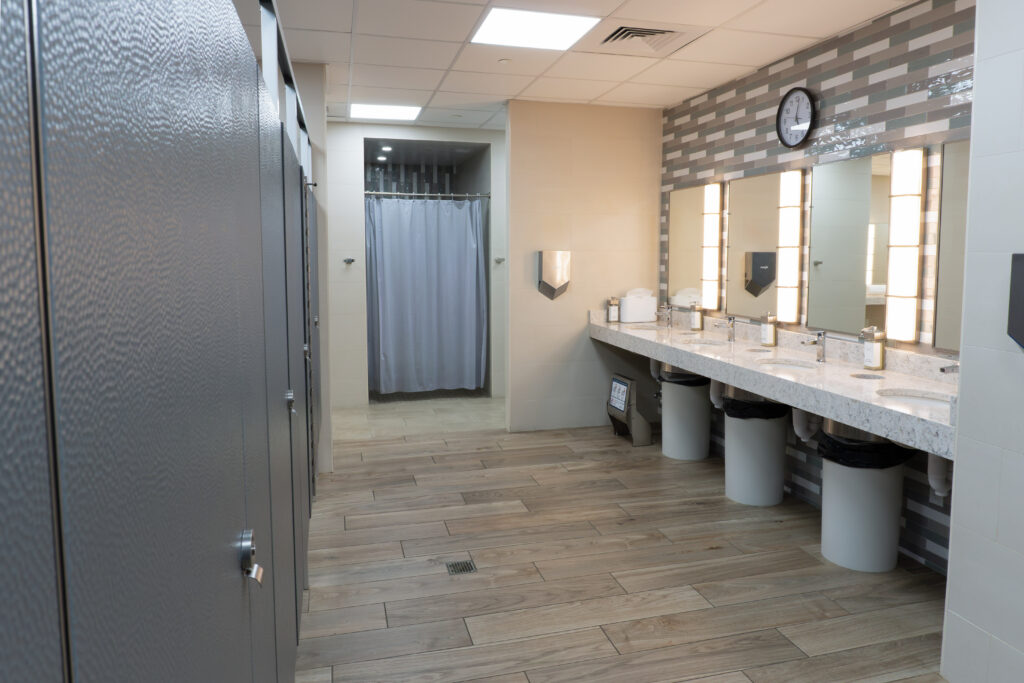
Village Health Clubs uses large ceramic planks that reduce grout in showers and durable, washable wall coverings that can withstand everyday use.
Weymouth similarly installed heavy-duty wall coverings in entrance and exit areas where bags routinely scrape against walls, reducing the need for repeated painting and repairs.
Truman said Orchard Hills is taking the same long-term approach, noting the club operates in a 40-year-old plus facility, and that locker rooms must withstand the constant use that comes with a gym.
But renovation is only half of the job. A beautiful locker room can quickly lose its impact if housekeeping and maintenance can’t keep up with it.
Village Health Clubs uses QR codes through its Fitness Vitality system so members can report issues such as dirt, missing towels or broken equipment directly to staff.
Weymouth also created operational efficiencies through digital locks for its rented lockers and remote sauna monitoring, allowing staff to identify and address problems quicker.
Communication is Key
Construction itself requires just as much planning as the finished product. Weymouth phased its renovations so members could use alternate locker rooms, while Village Health Clubs provided temporary facilities and directed members to nearby clubs.
At Orchard Hills, communication has been central to managing the disruption.
“You have to communicate what’s happening and what members can expect,” said Truman. “Explain its temporary inconvenience for long-term payoff.”
Locker rooms can be used to showcase a club’s investment in wellness, design and the member experience. The clubs with the strongest spaces are the ones where spending has a purpose.
That may mean a cold plunge for a club whose members are already seeking recovery services. It may mean a better shower, an additional toilet or a private changing room for a club dealing with capacity issues. It may mean keeping existing lockers that still perform well, spending more on a focal-point tile, or selecting a wall covering that will survive years of abuse.
“You can have beautiful finishes and impressive technology, but if the space isn’t clean, functional and properly maintained, none of that really matters,” said Truman.
For operators, that may be the clearest definition of a successful locker room renovation. One that members feel every time they walk through the door, without the club spending money where it won’t make a meaningful difference.